
Find Divorce Records in Clay County
Clay County divorce records are held at the Superior Court Clerk's office in Fort Gaines and cover all divorce cases filed in the county. This page explains how to request Clay County divorce records, what options exist for searching older filings, how the divorce filing process works under Georgia law, and where to find legal help if you need it.
Clay County Quick Facts
Where to Get Clay County Divorce Records
The Clay County Superior Court Clerk in Fort Gaines is the only source for divorce records filed in the county. All divorce cases go through the Superior Court, and the clerk maintains the full case file including the final decree. Clay is one of the smaller counties in Georgia, so the clerk's office serves a tight-knit community with a modest volume of divorce filings compared to larger urban counties.
Divorce records are public in Georgia. O.C.G.A. § 50-18-70 requires government agencies to make public records available on request. Unless a judge has issued a specific sealing order, Clay County divorce records are open to anyone who asks. You do not have to be a party to the case to request a copy.
| Court | Clay County Superior Court |
|---|---|
| Address | 111 Brown Street, Fort Gaines, GA 39851 |
| Phone | (229) 768-2631 |
| Hours | Monday through Friday, 8:00 AM to 5:00 PM |
| Website | https://www.claycountyga.gov/ |
Fort Gaines is a small town in southwest Georgia near the Chattahoochee River. The courthouse is on Brown Street, and parking is not a concern given the town's size. If you are traveling from Albany, Columbus, or Dothan, Alabama, it is worth calling ahead to confirm office hours and that the staff can locate the record you need before you make the trip.
The image below shows the GSCCCA statewide search portal at gsccca.org, which indexes Clay County cases alongside those from all Georgia superior courts.
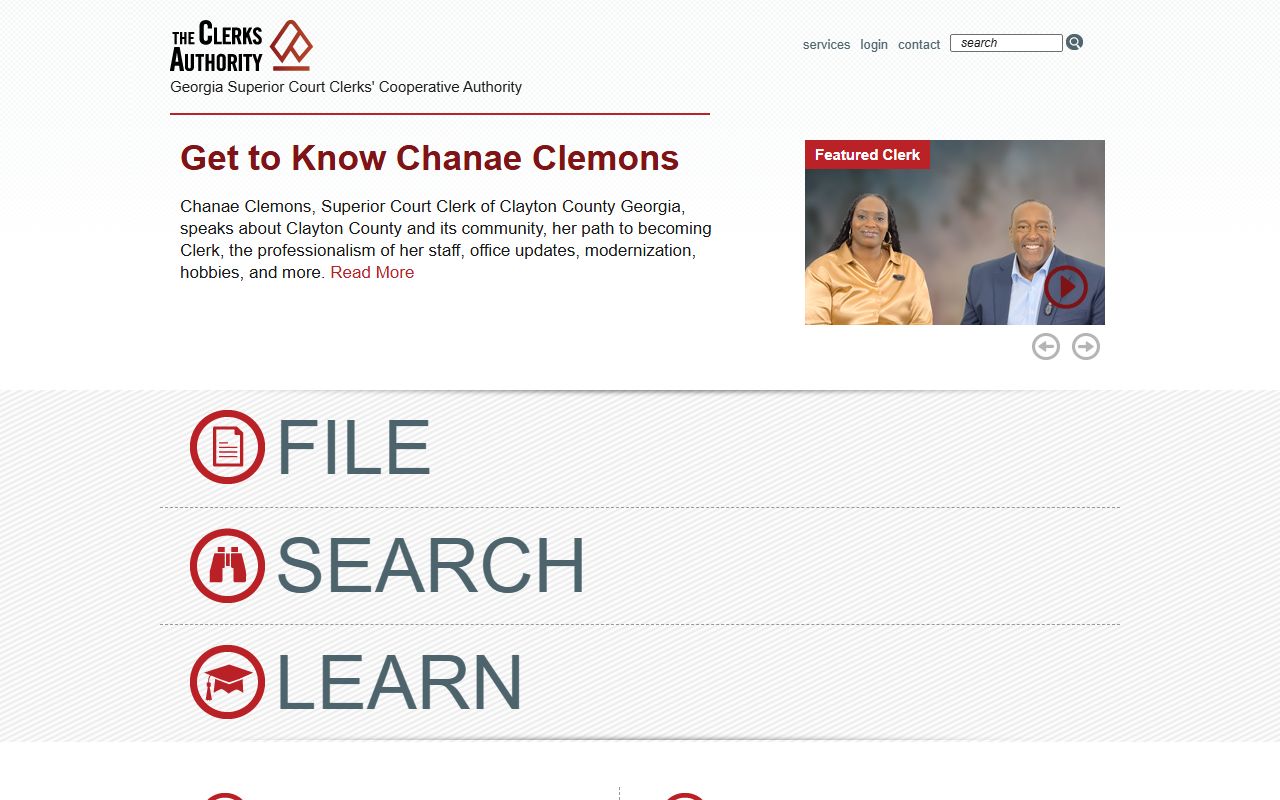
The GSCCCA portal is free to use and a practical starting point for any name-based search before contacting the clerk directly.
How to Search Clay Divorce Records Online
Clay County participates in the Georgia Superior Court Clerks' Cooperative Authority system at gsccca.org. You can search by party name to find case numbers and basic filing information. Because Clay County is small, the volume of results is manageable and name searches tend to be fast. The GSCCCA index is free and updated regularly.
Georgia E-Access at georgiacourts.gov/eaccess-court-records/ also covers some Clay County records. Between GSCCCA and E-Access, most cases filed electronically in the county are searchable online. For older paper-only records, a direct request to the Fort Gaines clerk is the only reliable option.
Clay County does not appear to have a county-specific online search portal of its own, which is common for smaller counties. The statewide tools are your best bet for online research. If those come up empty, call the clerk at (229) 768-2631 and ask about a manual index search. Staff in small county offices are often willing to do a quick name check over the phone to help you figure out whether to make the trip.
Note: For very small counties, GSCCCA coverage may be less complete for older records than for larger metro counties, so do not rule out a case just because it does not appear online.
Clay County Divorce Filing Process
Georgia law gives the Superior Court exclusive authority to grant divorces. O.C.G.A. § 19-5-1 is clear on this point. Divorces cannot be handled by magistrate or state courts. Every divorce case in Clay County goes through the Superior Court, no matter how simple or complex the circumstances.
Where to file is set by O.C.G.A. § 19-5-2. You file in the county where the defendant lives. If your spouse lives in Clay County, the case belongs here. If your spouse has left Georgia entirely, you may be able to file in your own county of residence instead. Residency questions can be tricky in cases where spouses have moved, and a brief consultation with a Georgia attorney can help clarify where to file.
After filing the petition and serving the defendant, a 30-day waiting period starts. The defendant has that time to respond. If both parties agree on all terms and file a settlement agreement, the case can be finalized after the waiting period ends. Contested cases require hearings and take longer, sometimes significantly so if custody or property disputes are involved.
Under O.C.G.A. § 19-5-3, Georgia recognizes both no-fault and fault-based grounds for divorce. Most Clay County divorces use irreconcilable differences, the no-fault ground, which eliminates the need to prove any specific wrongdoing. Fault grounds remain available but are used sparingly and typically only when they affect property division or custody outcomes.
Fees for Clay County Divorce Records
The Clay County clerk charges fees for copies of divorce records, with certified copies costing more than plain copies. Certified copies carry the court's official seal and are required for legal uses. Plain copies are sufficient for personal reference. Contact the clerk at (229) 768-2631 to ask for the current fee schedule before you visit or send a mail request.
Georgia DPH Vital Records at dph.georgia.gov/VitalRecords offers a $10 verification for divorces finalized between 1952 and 1996. This is a letter of confirmation, not a copy of the decree. For Clay County divorces in that date range where you only need to confirm the event occurred, the DPH verification is a quick option and can be requested by mail without a trip to Fort Gaines.
Under O.C.G.A. § 31-10-22, the Clay County clerk reports all finalized divorces to DPH monthly. This keeps the state records current. But if you need the full legal document with all terms, you must request it directly from the Superior Court Clerk in Fort Gaines rather than from DPH.
Note: For mail requests, include the full names of both parties, the approximate year, any known case number, and payment in the form of a check or money order made out to the clerk of court.
Legal Resources in Clay County
Georgia Legal Aid serves southwest Georgia and provides free civil legal services to low-income residents of Clay County. Because the county is small and has limited local attorney options, Legal Aid's services are particularly valuable for residents who cannot afford private counsel. You can apply online or by phone, and their attorneys handle divorce, custody, and family law matters.
The Georgia State Bar's lawyer referral service connects you with a licensed attorney for a low-cost initial consultation. While Clay County itself has few local attorneys, the referral service covers southwest Georgia and can find someone practicing in the region. Albany and Columbus, both within driving distance, have active family law bars.
For those handling their own case without an attorney, Georgia E-Forms provides free standardized divorce forms through the state judicial website. The clerk in Fort Gaines can explain which forms to file, though they cannot provide legal advice. For a simple uncontested divorce where both parties are in agreement, a pro se filing with the correct forms is feasible even in a small county clerk's office like Clay County's.
Divorce Certificates in Clay County
A divorce decree is the full court order the judge signs at the end of the case. A divorce certificate or verification is a shorter document that simply confirms the divorce occurred. For most legal transactions, a certified copy of the full decree is what you need, not a brief summary.
Georgia DPH at dph.georgia.gov/VitalRecords handles verifications for divorces from 1952 through 1996. These cost $10 and can be ordered by mail. The verification does not replace the decree and will not satisfy agencies that need the full terms of the court order. Think of it as a quick confirmation tool rather than a legal document.
To get a certified copy of a Clay County divorce decree, contact the Superior Court Clerk in Fort Gaines at (229) 768-2631. You can visit in person or write a mail request. Include both parties' names, the approximate date of the divorce, and any known case number. Payment and a self-addressed stamped envelope should accompany mail requests. In-person requests can sometimes be filled the same day, depending on whether the file is readily available or requires retrieval from storage.
Nearby Counties
Clay County sits in southwest Georgia near the Alabama border. If a divorce case may have been filed in a neighboring county, use these links to find the right clerk's office.