
Find Divorce Records in Decatur County
Decatur County divorce records are held by the Superior Court Clerk in Bainbridge and cover all divorce cases filed in this southwest Georgia county. Whether you are searching for a decree from years ago, looking up an active case, or need to order certified copies, this guide walks through every method available for finding Decatur County divorce records in person, online, or through the mail.
Decatur County Quick Facts
Where to Get Decatur County Divorce Records
The Decatur County Superior Court Clerk in Bainbridge holds every divorce record for the county. This office maintains the complete case files from petition through final decree, including any post-decree orders. If you need a certified copy of a decree, the clerk's office is where you go. Staff can search by name or case number and provide copies of what you need.
| Court | Decatur County Superior Court |
|---|---|
| Address | 112 West Water Street, Bainbridge, GA 39817 |
| Phone | (229) 248-3025 |
| Hours | Monday through Friday, 8:00 AM to 5:00 PM |
| Website | https://www.decaturcountyga.gov/ |
The courthouse is on West Water Street in Bainbridge. Decatur County is in the southwest corner of Georgia near the Florida and Alabama borders. If you are traveling from another county, call ahead to make sure the records you need are available and ask whether staff can have them ready before you arrive. Older records may be in an archive that takes extra time to pull.
Under O.C.G.A. § 50-18-70, divorce records in Georgia are public unless sealed by court order. Anyone may request access to Decatur County divorce records. Sealed cases are uncommon and usually involve sensitive issues related to minor children or other protected matters.
The image below shows the Decatur County official site, where courthouse contact details and updates are posted.
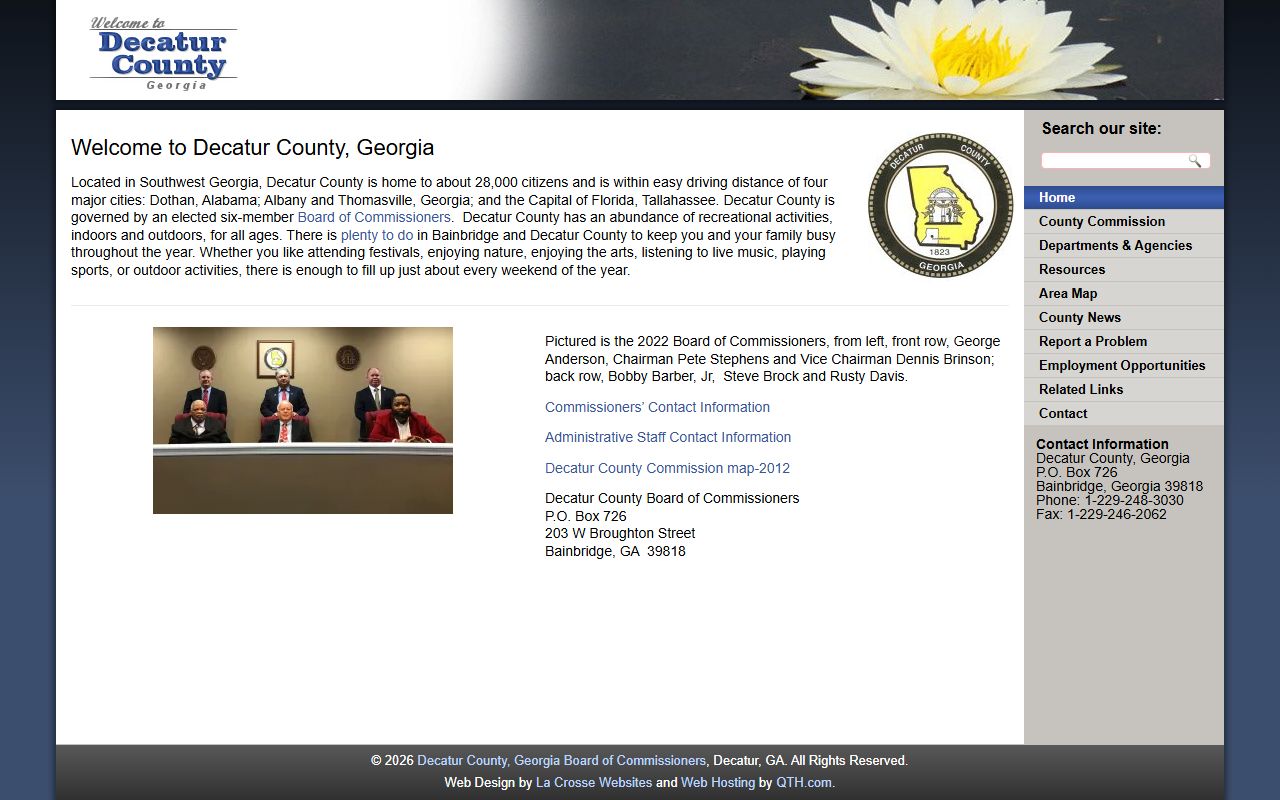
Check this site before visiting for any changes to hours or services that may affect your records request.
How to Search Decatur County Divorce Records
The Georgia Superior Court Clerks' Cooperative Authority at gsccca.org is the main free tool for online searching. It indexes case data from counties across the state, including Decatur. You can search by the names of either party and pull up filing dates, case numbers, and status information. The system does not always provide full document images for smaller counties, but it gives you enough to confirm a case and get the docket number before requesting copies.
Georgia E-Access at georgiacourts.gov/eaccess-court-records/ offers a second statewide search option. If Decatur County participates in this system, you may find more case detail there. Either way, an online search gives you a starting point before you call or visit the courthouse.
Mail-in requests are an option if you cannot visit in person. Write to the Decatur County Superior Court Clerk at 112 West Water Street, Bainbridge, GA 39817. Include the names of both parties, the approximate year, your return address, and a check or money order for the copy fee. A self-addressed stamped envelope speeds the process along. Call (229) 248-3025 first to confirm the fee amount.
Note: Archive requests for older paper records may take additional time since staff must physically retrieve files from storage.
Decatur County Divorce Filing Process
Georgia Superior Courts have exclusive authority to grant divorces. O.C.G.A. § 19-5-1 is clear on this. Only a Superior Court judge can sign a divorce decree. The Decatur County Superior Court in Bainbridge handles all divorces for Decatur County residents.
Where you file depends on where the defendant lives. O.C.G.A. § 19-5-2 requires the petition to be filed in the county where the defendant resides. If your spouse lives in Decatur County, the case is filed here. If your spouse has moved or lives in a different county, the filing goes there. This rule is important when tracking down records because the file will be wherever the case was originally filed.
Georgia lists 13 grounds for divorce under O.C.G.A. § 19-5-3. Irretrievable breakdown is the most widely used. It does not require one party to prove fault. After a petition is filed in Bainbridge, the other spouse must be served. The law then requires a 30-day wait before the court can enter a final decree. Uncontested cases generally move faster than contested ones, but neither can skip the waiting period.
The signed decree becomes the permanent court record. The Decatur County clerk files it and holds it indefinitely. Certified copies are available at any point after the decree is entered.
Decatur County Copy Fees and Costs
Copy fees at the Decatur County Superior Court depend on what you need. Plain copies cost less than certified copies. The clerk can quote you the current per-page rate over the phone at (229) 248-3025. Always confirm before visiting or mailing a payment since fees can change.
For divorces that occurred between 1952 and 1996, the Georgia Department of Public Health at dph.georgia.gov/VitalRecords offers a $10 verification. This confirmation shows names, date, and county of divorce but does not include the full decree. It is useful for some administrative purposes but not for legal matters that require the complete court order. For the actual decree, you must request it from the Decatur County clerk.
If the divorce falls outside the 1952 to 1996 range, the DPH has nothing at all. The Decatur County Superior Court Clerk is your only option for any record outside that window.
Divorce Decrees vs. Certificates in Decatur County
These two documents are not the same and they are not held by the same office. Mixing them up leads to delays.
A divorce decree is the actual court order. It is the full legal document that records every ruling the judge made. This includes how property was divided, any spousal support awarded, child custody arrangements, and child support amounts. The Decatur County Superior Court Clerk in Bainbridge is the only place to get a copy of the decree. Most banks, courts, and agencies that ask for proof of divorce want to see the full decree because it contains the binding legal terms.
A divorce certificate or state verification is a summary record held by the Georgia Department of Public Health. It only covers divorces from 1952 through 1996. The verification costs $10 and lists the names, date, and county. It includes no terms of the court's orders. For divorces before 1952 or after 1996, the DPH has no record at all. When in doubt, request the decree from the Decatur County clerk. It serves every purpose the certificate does and covers much more ground.
Note: Remarriage paperwork and name change requests at the Social Security Administration typically require the full court decree, not just a DPH verification.
Legal Help in Decatur County
Georgia Legal Aid at georgialegalaid.org serves Decatur County through its Southwest Georgia regional office. They help low-income residents with family law cases including divorce, custody, and support modifications. Eligibility is based on income. The website has both an intake form and free self-help tools that any resident can use.
For those who want to file without a lawyer, the Georgia E-Forms portal at eforms.georgiacourts.gov offers approved court forms for uncontested divorces. These forms are the right ones to use in Georgia courts and include filing instructions. The Decatur County clerk can tell you which local forms may also be required alongside the state forms.
Clerks cannot give legal advice. For contested cases involving property, debt, or custody disputes, finding a licensed attorney through the Georgia State Bar's referral service is worth doing. Limited-scope consultations with a lawyer are sometimes available for people who need help with only part of the process.
Nearby Counties
Decatur County borders several southwest Georgia counties. If a divorce was filed near the county line, records may be in one of these adjacent counties depending on where the defendant lived.