
McDuffie County Divorce Records
McDuffie County divorce records are held by the Superior Court Clerk in Thomson and cover all divorce cases filed in the county. Whether you need to locate a certified decree, look up case details from past years, or confirm the status of a filing, this page explains how to access McDuffie County divorce records through online search tools, the Thomson courthouse, and written mail requests.
McDuffie County Quick Facts
Where to Get McDuffie County Divorce Records
The McDuffie County Superior Court Clerk in Thomson is the official custodian of all divorce case records for the county. Every divorce filed here, from the initial petition through the final decree, is indexed and stored in the clerk's files. Staff handle records requests from walk-in visitors during business hours and process mail-in requests as well. Thomson is the county seat and the center of court activity in McDuffie County.
Georgia court records are accessible to the public under O.C.G.A. § 50-18-70. You don't need to show a legal reason to request a copy of a divorce file. Sealed records are uncommon and exist only when a judge has issued a specific order restricting access. The clerk will confirm on request whether a specific file is open or restricted.
| Court | McDuffie County Superior Court |
|---|---|
| Address | 337 Main Street, Thomson, GA 30824 |
| Phone | (706) 595-2100 |
| Hours | Monday through Friday, 8:00 AM to 5:00 PM |
| Website | https://www.mcduffiecountyga.gov/ |
The courthouse is on Main Street in Thomson. McDuffie County is in east-central Georgia, west of Augusta. The clerk's office serves the Thomson community and surrounding parts of the county and is experienced with processing records requests. Calling before a visit is helpful, particularly for older cases that may require advance preparation.
The Georgia E-Access portal below provides online access to Georgia court records, including cases from McDuffie County.
Access Georgia court records including McDuffie County divorce cases at georgiacourts.gov/eaccess-court-records/.
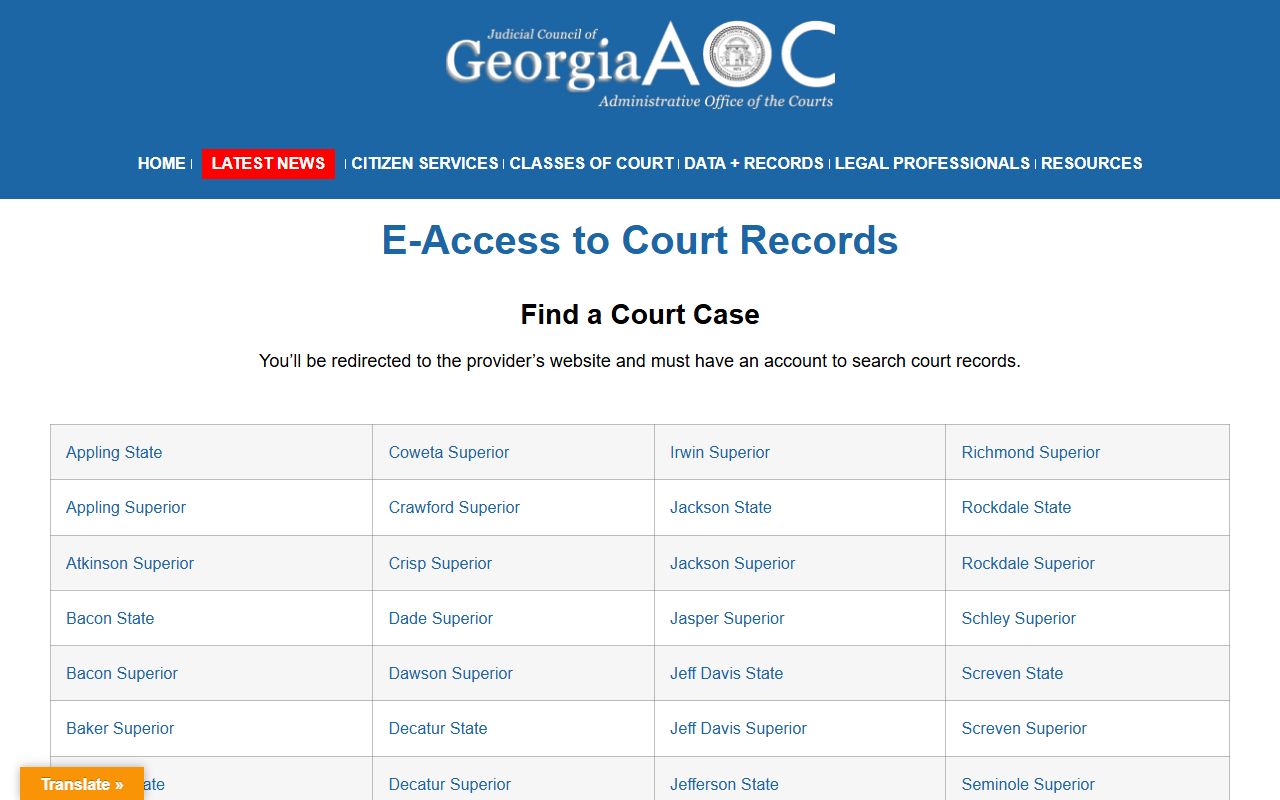
The Georgia E-Access portal provides an additional online search option for McDuffie County Superior Court divorce case records alongside the GSCCCA system.
Searching McDuffie County Divorce Records Online
Start your search at the Georgia Superior Court Clerks' Cooperative Authority at gsccca.org. This free statewide portal includes McDuffie County divorce records. Enter party names or a case number to find basic information including filing date and case status. This is the most efficient first step before contacting the Thomson courthouse.
Georgia E-Access at georgiacourts.gov/eaccess-court-records/ is a second state portal for court case data. Both GSCCCA and E-Access are worth checking, as the two systems may contain different data depending on upload schedules and formats. Running parallel searches takes only a few minutes and maximizes your online coverage.
For older McDuffie County records before electronic systems, the clerk at (706) 595-2100 is the contact point. Provide the names of both parties and an estimated year. Staff will search the paper archive manually. Older files, particularly those from before the 1990s, may take a business day or more to locate and retrieve.
Mail requests go to the clerk's office at 337 Main Street, Thomson, GA 30824. Include all identifying information, the type of copy requested, and a money order for the estimated fee. Confirm fees by phone before sending to avoid delays.
Note: When searching by name through GSCCCA, use a spelling variant search if you are uncertain about the exact spelling used at the time of filing.
Divorce Filing Requirements in McDuffie County
Georgia's residency requirement at O.C.G.A. § 19-5-2 mandates that at least one spouse must have lived in Georgia for six months and in McDuffie County for at least thirty days immediately before filing. This is a jurisdictional threshold. Without meeting it, the Superior Court here cannot hear the divorce case.
Under O.C.G.A. § 19-5-3, Georgia allows divorce on no-fault grounds. The most common ground is that the marriage is irretrievably broken, which requires no evidence of wrongdoing by either party. Fault grounds, including adultery, desertion, and cruel treatment, remain available and can sometimes affect alimony or property outcomes, but they are far less commonly used.
After filing the petition, the respondent must be served through the McDuffie County Sheriff, a private process server, or by signing a voluntary service waiver. The respondent then has thirty days to answer. Georgia also requires a thirty-day waiting period from service before the final decree can be entered. These timelines apply to all cases without exception.
McDuffie County uncontested divorces can move through the system efficiently once the waiting period has passed and all paperwork is submitted. Contested cases involving property disputes or child custody issues require more time and may involve mediation or court hearings.
Copy Fees for McDuffie County Records
Copy fees at the McDuffie County Superior Court Clerk's office follow standard Georgia rates. Plain copies cost less than certified copies. Certification adds the court seal and clerk's signature and is required when presenting a decree to government agencies, financial institutions, or out-of-state courts. Know what type of copy you need before requesting to avoid multiple trips.
For divorces between 1952 and 1996, the Georgia DPH offers a verification search at $10 through dph.georgia.gov/VitalRecords. This is a summary record that confirms basic event facts, not the terms of the court order. It is appropriate for genealogical research and basic confirmation of older divorces.
For divorces after 1996 or when the full court order is needed, the McDuffie County clerk is the source. Call (706) 595-2100 to confirm current fees before sending any payment. Money orders are the safest option for mail requests.
Legal Resources in McDuffie County
McDuffie County residents who want to file for divorce without hiring a lawyer can use the Georgia Courts E-Forms portal at eforms.georgiacourts.gov. These free, Georgia Supreme Court-approved forms are designed for uncontested divorces. They work for cases where both parties agree and there are no contested issues involving children or property.
Georgia Legal Aid at georgialegalaid.org provides free legal assistance to income-qualified residents in McDuffie County. Their online intake form determines eligibility. Legal Aid covers family law matters and may be able to provide advice, document assistance, or referrals depending on what resources are available in the area.
For contested cases, particularly those involving significant property or child custody, a licensed family law attorney provides the most effective guidance. The State Bar of Georgia can connect you with a qualified attorney who practices in the Augusta area or east Georgia judicial circuits that cover McDuffie County.
Note: The Augusta-Richmond County area is close to Thomson and home to several family law practices that regularly handle McDuffie County cases.
Court Decrees vs. State Divorce Records
The McDuffie County Superior Court divorce decree is the complete court order. It contains every term of the divorce including property, alimony, and custody. This is the primary legal document and is required for most official purposes. Certified copies come from the clerk's office in Thomson.
The Georgia DPH statewide index under O.C.G.A. § 31-10-22 is a summary record based on county-submitted data. It shows the basic event, date, and county but does not include the court's specific orders. This record is useful for genealogy and basic historical confirmation but is not a substitute for the certified court decree when terms need to be established.
For most practical legal needs, request the certified court decree from the McDuffie County Superior Court Clerk. The DPH record is a helpful supplement but should not replace the full decree for official purposes.
Nearby Counties
McDuffie County is in east Georgia west of Augusta. Cases near county borders may have been filed in a neighboring jurisdiction below.