
Paulding County Divorce Records
Paulding County divorce records are filed with the Superior Court Clerk in Dallas and include all dissolution cases from initial petition through final decree. This page explains how to search Paulding County divorce records, request certified copies, use online tools like GSCCCA and eCertification, and find legal help if your case is contested or involves children.
Paulding County Quick Facts
Where to Get Paulding County Divorce Records
The Paulding County Superior Court Clerk's Office in Dallas is the official keeper of all divorce records for the county. The office is located at 90 North Street, Suite 340, Dallas, GA 30132. The phone number is (770) 443-7560. Hours are Monday through Friday, 8:00 AM to 5:00 PM. The clerk handles certified copies, uncertified copies, case file access, and mail requests for Paulding County divorce records.
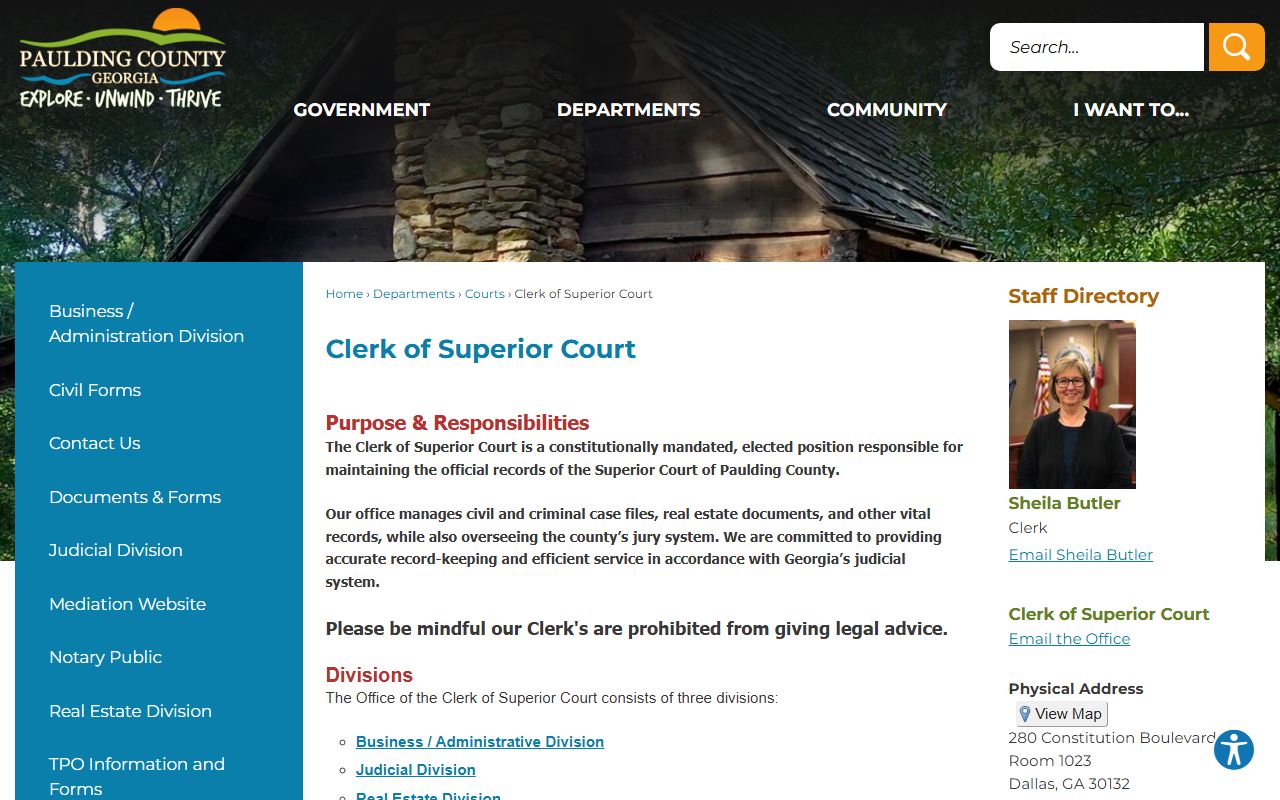
As the clerk's office notes, it is a constitutionally mandated, elected position responsible for maintaining the official records of the Superior Court of Paulding County, managing civil and criminal case files, real estate documents, and other vital records. Divorce case files fall under civil records and are part of this official function.
Most Paulding County divorce records are public under O.C.G.A. § 50-18-70. Any person may request access to completed divorce files. Sealed records are the exception and the clerk will identify them if your request involves one.
| Court | Paulding County Superior Court |
|---|---|
| Address | 90 North Street Suite 340, Dallas, GA 30132 |
| Phone | (770) 443-7560 |
| Hours | Monday through Friday, 8:00 AM to 5:00 PM |
| Website | https://www.paulding.gov/92/Clerk-of-Superior-Court |
The screenshot below shows the Paulding County government website, which includes the Clerk of Superior Court page with contact details and service information.
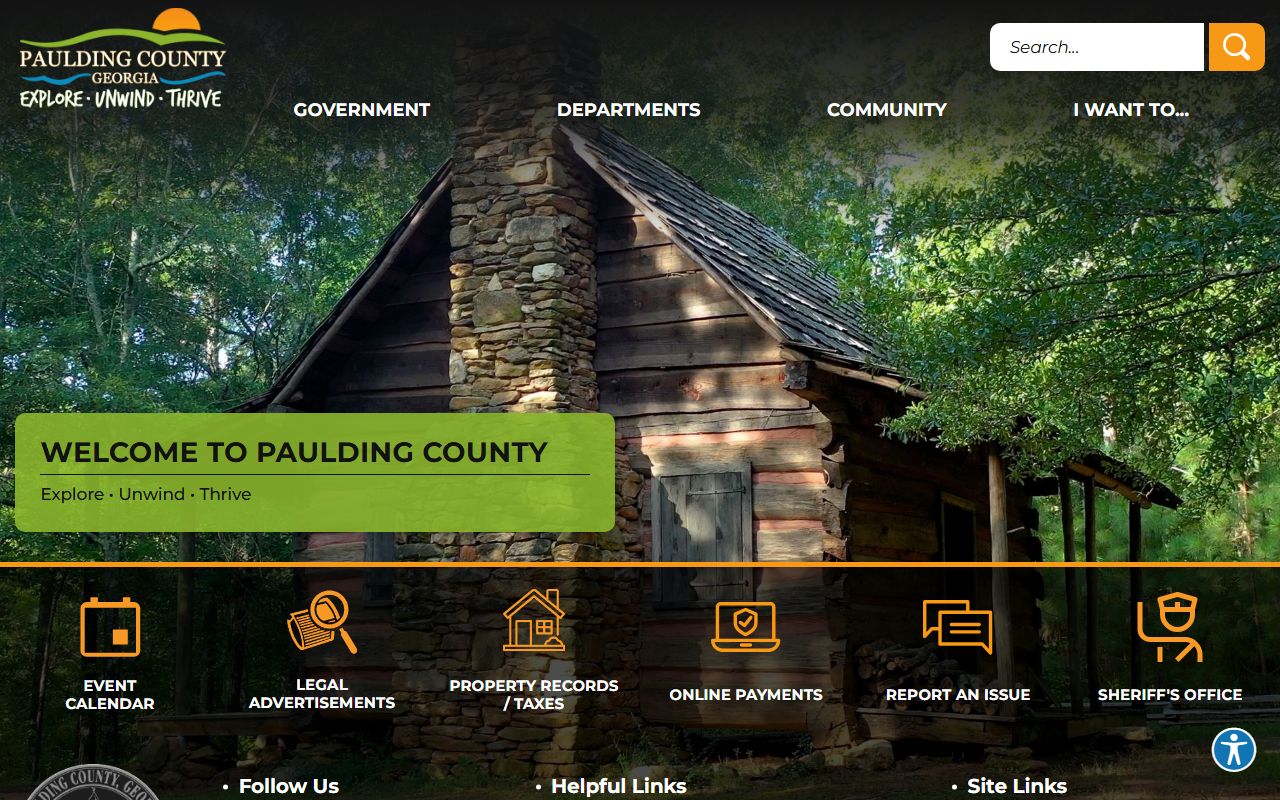
The county site links to the clerk's office, fee schedules, and other services relevant to accessing Paulding County divorce records.
Online Search Tools for Paulding County Divorce Records
Paulding County participates in the Georgia Superior Court Clerks' Cooperative Authority at gsccca.org. GSCCCA provides a statewide index for civil filings, including divorce cases in Paulding County. You can search by party name or case number to confirm a case exists and retrieve the docket number for a records request. The FANS system, the Filing Activity Notification System, is also available through GSCCCA. FANS lets you sign up to receive alerts whenever a new document is filed in Paulding County using your name or a name you're monitoring.
Paulding County also uses Peach Court for mandatory e-filing of civil cases. Attorneys in the county are required to submit civil filings electronically through this platform. Many of those filings are accessible through GSCCCA once they are docketed. Certified copies of electronically filed documents can often be obtained through GSCCCA's eCertification portal, which delivers a court-certified PDF directly to you without a trip to the courthouse.
Georgia Courts E-Access at georgiacourts.gov/eaccess-court-records/ provides case status and docket data for many Superior Court cases statewide, including Paulding County. Use this tool to verify case information or get the case number you need before contacting the clerk.
The image below shows the Paulding County Clerk of Superior Court page, where you can find links to online filing tools and records access resources.
Note: eCertified PDFs from GSCCCA carry the same legal weight as paper-certified copies from the clerk's office and are accepted by most agencies and courts.
How Divorce Cases Work in Paulding County
Divorce cases in Paulding County are filed with the Superior Court Clerk in Dallas. Georgia requires one spouse to have lived in the state for at least six months before filing, as set out in O.C.G.A. § 19-5-2. Cases are normally filed in the county where the defendant lives. If the defendant lives outside Georgia, the plaintiff can file in their own county of residence.
Georgia law under O.C.G.A. § 19-5-3 recognizes thirteen grounds for divorce. Irretrievable breakdown is used in the large majority of cases. It requires no proof of fault. After the defendant is served, a 30-day waiting period must pass before the court can enter a final decree. Uncontested cases with an agreed settlement can move through relatively quickly after that. Contested cases take longer depending on what's in dispute.
Mandatory e-filing through Peach Court applies to attorneys in civil cases in Paulding County. Pro se parties, those filing without an attorney, can still file paper forms at the clerk's office. Free state-approved forms are available at eforms.georgiacourts.gov.
Paulding County Divorce Record Copy Fees
Effective July 1, 2025, the Paulding County Superior Court Clerk's fee schedule sets standard uncertified copy fees at $1.00 per page. Certified copies cost $2.50 for the first page and $0.50 for each additional page. These rates apply to divorce decrees and all other civil case documents held by the clerk. Always confirm current rates before submitting a request because fee schedules can be updated.
eCertified copies obtained through GSCCCA may carry slightly different pricing depending on the platform. These digital certified PDFs are legally equivalent to paper certified copies and are often faster to obtain. Check the GSCCCA portal for current eCertification pricing.
For divorces that took place between 1952 and 1996, the Georgia Department of Public Health offers a verification service at $10 per request. Access it at dph.georgia.gov/VitalRecords. Note that this is a summary document, not a full certified decree copy.
Legal Resources for Paulding County Residents
Paulding County is one of the Atlanta metro area's growing counties, and legal resources here reflect that scale. Georgia Legal Aid at georgialegalaid.org provides free civil legal services to qualifying low-income individuals, including assistance with family law matters such as uncontested divorces. The site can direct you to the nearest office serving the Dallas area.
For those filing without an attorney, the Georgia Courts E-Forms portal at eforms.georgiacourts.gov has fillable state-approved divorce forms with plain-language instructions. If your situation is contested or involves minor children, significant shared assets, or a dispute over support, a family law attorney is strongly recommended. The Georgia State Bar's Lawyer Referral Service can help you find one.
Note: Because Paulding County requires attorneys to use Peach Court for e-filing, any private attorney you hire will already be familiar with the county's electronic filing system. That's worth knowing before you start the process.
Divorce Decrees vs. State Divorce Certificates
Two different documents can confirm a Georgia divorce, but they serve different purposes and come from different sources. The divorce decree is the full court order entered by the Paulding County Superior Court judge. It includes every term of the dissolution: property division, child custody and support, alimony, and any name restoration. Certified copies come from the clerk's office. This is the legally binding document that governs what was ordered by the court.
A state divorce certificate is a summary-level record maintained by the Georgia Department of Public Health. The DPH index covers divorces from 1952 through 1996. A DPH verification costs $10 and confirms the divorce took place along with basic facts. It does not show custody arrangements, property orders, or support obligations. When you need to enforce an order or use the record in a legal proceeding, the certified decree from the Paulding County clerk is the only document that works. Use dph.georgia.gov/VitalRecords for DPH requests.
Nearby Counties
Paulding County is in northwest Georgia and is adjacent to several counties that maintain their own divorce record systems.