
Talbot County Divorce Records Search
Talbot County divorce records are filed with the Superior Court Clerk in Talbotton and are available to the public as Georgia law requires. This guide covers where the records are kept, how to request certified copies, and how to use statewide online tools to search Talbot County divorce cases.
Talbot County Quick Facts
Where to Get Talbot County Divorce Records
The Talbot County Superior Court Clerk in Talbotton holds all divorce records filed in the county. This small clerk's office at 46 Washington Avenue handles civil and domestic filings for the county. Staff can assist with document lookups, copy requests, and questions about case status during regular business hours.
Georgia's Open Records Act at O.C.G.A. § 50-18-70 makes divorce records public documents. Any member of the public may access them unless a specific court order seals a case. Sealed records are uncommon. If you are a party to a sealed case, you can petition the court to access your own file.
| Court | Talbot County Superior Court |
|---|---|
| Address | 46 Washington Avenue, Talbotton, GA 31827 |
| Phone | (706) 665-3239 |
| Hours | Monday through Friday, 8:00 AM to 5:00 PM |
| Website | https://www.talbotcountyga.gov/ |
Talbotton is a small community in west-central Georgia. The courthouse is on Washington Avenue in the town center. Because the county has a small population, the clerk's office handles a relatively low volume of cases. Staff are often available to assist quickly, but calling ahead is always a good idea, especially for older records that may need to be pulled from storage.
The screenshot below shows the Georgia DPH Vital Records portal at dph.georgia.gov/VitalRecords, which provides a divorce verification service for cases from 1952 through 1996 as a complement to the county clerk.
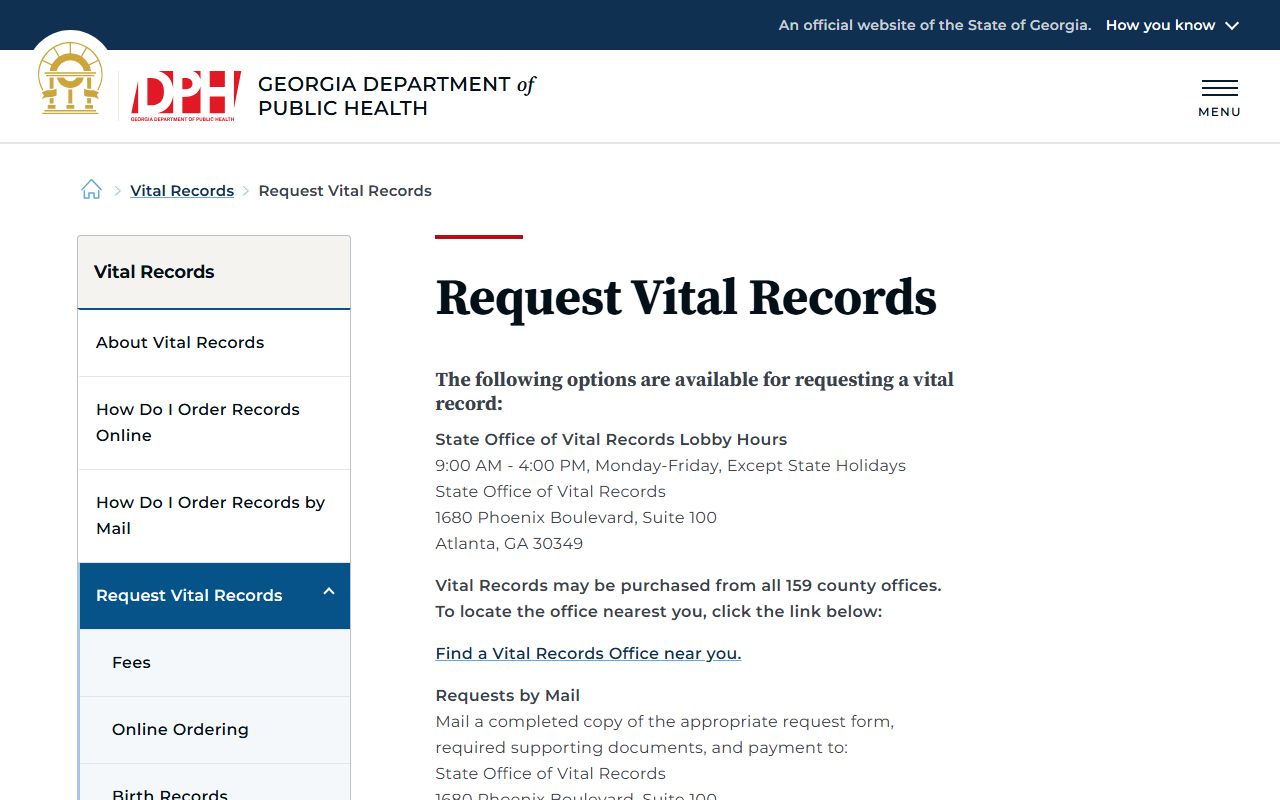
The DPH verification confirms that a divorce occurred but does not contain the full decree text. Contact the Talbot County clerk for a certified copy of the complete document.
Note: In small counties, staff reductions or training days can occasionally limit service. Calling before you visit is the best way to avoid a wasted trip.
Searching Talbot County Divorce Records Online
The GSCCCA statewide portal at gsccca.org indexes Talbot County divorce cases. You can search free by party name to find case numbers, filing dates, and basic case details. This is the most accessible online tool for finding Talbot County filings before you contact the clerk in person.
Georgia E-Access at georgiacourts.gov/eaccess-court-records/ provides another statewide case data source. For rural counties like Talbot, the online index may not cover all older cases that were filed before digital recordkeeping became standard. When you cannot find a case online, a direct call or mail request to the clerk is the next step.
Written requests work well for this courthouse. Include the full names of both parties, the approximate year of the divorce, and a return envelope with postage. Payment is made once the clerk confirms the fee and availability of the record.
Talbot County Divorce Filing Process
In Georgia, only the Superior Court can grant a divorce. O.C.G.A. § 19-5-1 establishes this exclusive jurisdiction. The Talbot County Superior Court in Talbotton is where all divorce cases originating in the county are filed and decided.
The venue rule under O.C.G.A. § 19-5-2 generally requires filing in the county where the defendant lives. So if your spouse lives in Talbot County, you file here. If your spouse has left the state, you may be able to file in your own county. Cases filed in the wrong county can be transferred, but this creates delays and extra paperwork.
After the defendant is served, there is a 30-day waiting period before the court can finalize the divorce. Uncontested cases that are ready to go can move quickly once that window closes. Contested divorces involving disputes over property, children, or debt take longer. The judge schedules hearings as needed to resolve outstanding issues before entering the final decree.
Georgia divorce grounds are listed in O.C.G.A. § 19-5-3. Irreconcilable differences is the no-fault ground used in most cases today. Fault grounds exist and include things like adultery, cruel treatment, and abandonment, but they require additional proof and are not commonly used in modern filings. The final signed decree becomes part of the public record held by the Talbot County clerk.
Fees for Talbot County Divorce Record Copies
The Talbot County Superior Court Clerk sets fees for copies. Certified copies carry the court seal and clerk's signature and are required for legal transactions. Plain copies are cheaper but not accepted for government or legal purposes. Call (706) 665-3239 before visiting to confirm the current fee schedule.
Georgia DPH at dph.georgia.gov/VitalRecords provides $10 divorce verifications for cases from 1952 to 1996. Under O.C.G.A. § 31-10-22, each county clerk files monthly reports with DPH for all finalized divorces, which is how that state database was built and maintained. DPH verifications confirm the divorce occurred but do not include the actual decree.
Legal Resources for Talbot County Residents
Georgia Legal Aid covers Talbot County and offers free or reduced-cost civil legal services to qualifying residents. Uncontested divorce assistance, custody help, and family law guidance are available. Apply online or check eligibility at georgialegalaid.org. Income requirements apply.
The Georgia E-Forms project at eforms.georgiacourts.gov provides free court-approved divorce forms for uncontested cases. For Talbot County residents handling a straightforward divorce without an attorney, these forms simplify the process considerably. The clerk can answer basic procedural questions about where to file and how to serve the other party, though they cannot provide legal advice.
Divorce Decrees vs. Certificates
The decree is the court order that ends the marriage and contains all its terms. A certificate is a shorter confirmation record. Georgia's system uses DPH verifications rather than traditional divorce certificates. For most uses, the certified decree from the Talbot County clerk is what government agencies, banks, and legal institutions require.
DPH verifications work when you only need to confirm a divorce occurred between 1952 and 1996 and don't need the full document. Outside that window, or whenever the terms of the divorce are relevant, get the certified decree from the county clerk. The GSCCCA name search at gsccca.org can help you confirm which county holds the record if you are not certain.
Nearby Counties
Talbot County sits in west-central Georgia. Neighboring counties each maintain divorce records through their own Superior Court Clerk offices.