
Chattahoochee County Divorce Records
Divorce records in Chattahoochee County are maintained by the Clerk of Superior Court in Cusseta, which serves as the county seat and home to the only court authorized to grant divorces in the county. This page covers how to search Chattahoochee County divorce records, what information you can request, how to get copies, and where to find legal help if you need it. Whether you are searching for your own records or trying to confirm a divorce from years ago, the Superior Court Clerk is your starting point.
Chattahoochee County Quick Facts
Where to Access Chattahoochee County Divorce Records
The Chattahoochee County Superior Court Clerk in Cusseta is the official keeper of all divorce case files for the county. Any request for divorce records, whether certified copies, plain copies, or simple case information, starts at this office. The clerk handles domestic filings for the entire county, and their records go back to the county's earliest court proceedings.
Georgia's Open Records Act at O.C.G.A. § 50-18-70 makes divorce records accessible to the public. You do not have to be one of the parties named in a case to ask for copies. A judge must have ordered the records sealed before access can be denied, and that happens only in specific circumstances. Most Chattahoochee County divorce files are open and available on request.
| Court | Chattahoochee County Superior Court |
|---|---|
| Address | 108 College Street, Cusseta, GA 31805 |
| Phone | (706) 989-3424 |
| Hours | Monday through Friday, 8:00 AM to 5:00 PM |
| GSCCCA | gsccca.org/clerks/clerk-results?cid=24 |
The screenshot below shows the GSCCCA clerk page for Chattahoochee County, which is one of the main online entry points for searching divorce case records statewide.
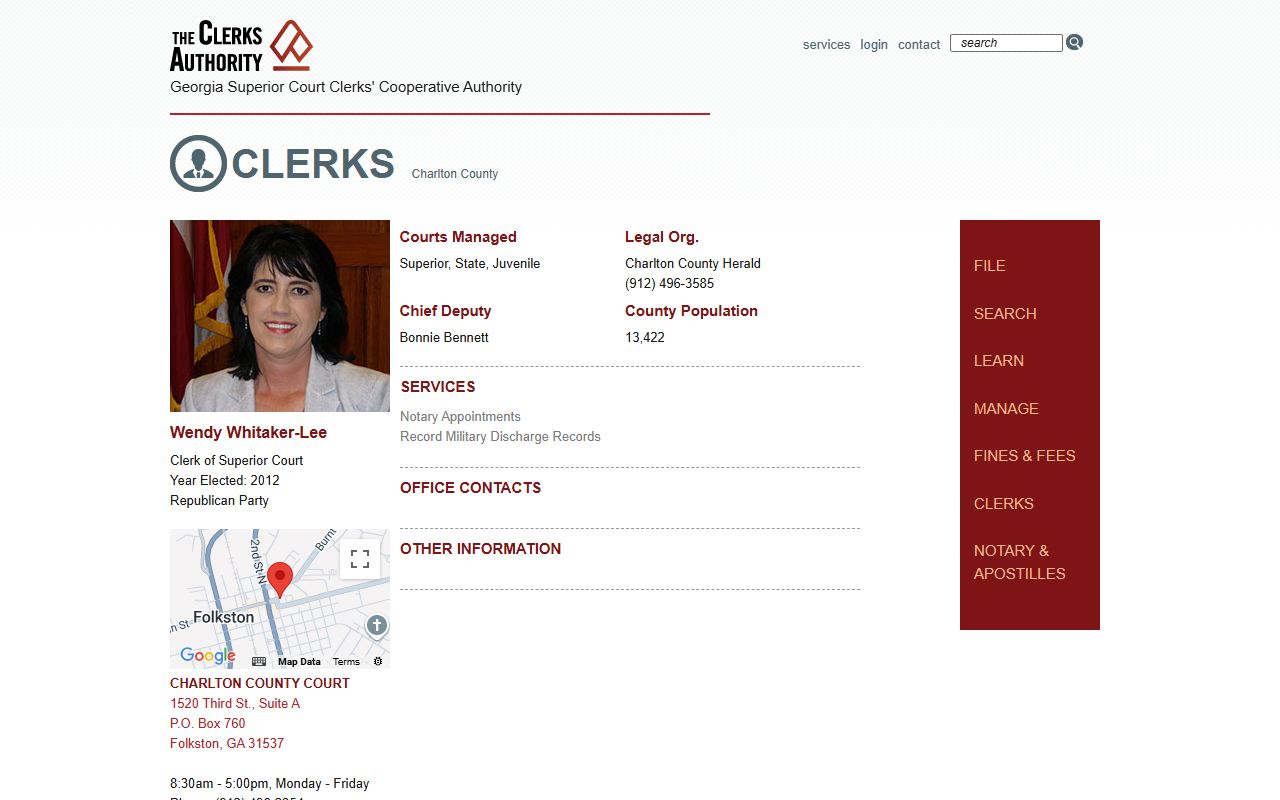
The GSCCCA portal provides name-based index searches and links directly to the Chattahoochee County clerk's data within the statewide system.
Online Search for Chattahoochee Divorce Cases
The Georgia Superior Court Clerks' Cooperative Authority at gsccca.org offers free public access to court records across Georgia, including Chattahoochee County. You can search by party name to find divorce cases, get filing dates, and retrieve case numbers without visiting the courthouse in Cusseta.
The GSCCCA index is a good first step. It lets you confirm whether a case exists and gather basic details before making a formal copy request. Once you have a case number, contacting the clerk directly is straightforward. For more recent filings, the Georgia E-Access portal at georgiacourts.gov/eaccess-court-records/ may also return results for Chattahoochee County cases.
Older divorces, particularly those from before the early 1990s, may not appear in any online database. Paper-based filing systems from that era were not always transferred to digital records when counties joined statewide platforms. If a case from the 1970s or 1980s does not show up online, call the clerk directly and ask if they can search by name in their physical index books.
Note: Name spelling matters in case index searches. Try alternate spellings if your first search returns no results.
Filing Divorce in Chattahoochee County
All divorces in Georgia must go through the Superior Court. Under O.C.G.A. § 19-5-1, only the Superior Court has the authority to hear and grant divorces in the state. Chattahoochee County has its own Superior Court serving all residents, and that is where divorce petitions must be filed.
Which county you file in depends on where the defendant lives. O.C.G.A. § 19-5-2 sets the rules for venue. If your spouse lives in Chattahoochee County, you file here. If both of you live in the county, the same applies. Military families in the area near Fort Moore should note that residency rules can get complicated when active-duty service members are involved, and it may be worth consulting an attorney to confirm the proper filing location.
After the other party is served with the divorce petition, a 30-day waiting period begins. During that time, the defendant can file a response. In uncontested cases where both parties have already agreed on all issues, the case can often be resolved quickly after that period. Contested cases, especially those involving custody, property division, or support disputes, take considerably longer.
Grounds for divorce in Georgia are listed at O.C.G.A. § 19-5-3. The no-fault option of irreconcilable differences is by far the most common. It does not require either party to prove wrongdoing and tends to keep the process simpler.
Requesting Copies of Divorce Records
When you contact the Chattahoochee County clerk, you will typically be asked for the full names of both parties, the approximate year of the divorce, and the case number if you have it. Staff can often locate a case with just the names and a general year, though having a case number speeds things up significantly.
Copies come in two types. Plain copies are standard photocopies of the original documents and are fine for personal use or background research. Certified copies carry the court's official seal and the clerk's signature, making them legally admissible. You need a certified copy when presenting proof of divorce to government agencies, courts in other states, banks, or employers who require legal documentation.
Call the clerk at (706) 989-3424 to ask about current copy fees and whether remote or mail-in requests are accepted. Many smaller Georgia counties do process mail requests when the requestor provides a self-addressed envelope and correct payment. The clerk's office can walk you through the exact steps.
Georgia DPH Divorce Verifications
The Georgia Department of Public Health maintains a statewide database of divorce verifications for cases finalized between 1952 and 1996. Under O.C.G.A. § 31-10-22, Superior Court Clerks report completed divorces to DPH each month, which is how that centralized record was built over the decades.
A DPH verification costs $10 and is a letter confirming the divorce occurred, including the names of the parties and the county and year of the filing. It is not a copy of the court order. If you need the actual decree, the court record is the only source. But if you only need to confirm that a divorce happened and you know it falls within that 1952 to 1996 window, the DPH route through dph.georgia.gov/VitalRecords can be faster than requesting from the county clerk.
For divorces outside that date range, the DPH database has no entries. You must contact the Chattahoochee County Superior Court Clerk directly for older or newer cases.
Note: A DPH verification and a certified court record serve different purposes. Make sure you know which one the requesting party actually needs before ordering.
Legal Help in Chattahoochee County
Chattahoochee County is a small, rural county. Local private family law attorneys may be limited, and many residents seek counsel in nearby Columbus. Georgia Legal Aid provides free civil legal help to qualifying low-income residents and covers the region. They handle uncontested divorces, protective orders, and related family matters.
The Georgia State Bar's lawyer referral service can connect you with an attorney in the area for an initial consultation at a reduced cost. Even a single session helps clarify your options. For those handling their own case, the Georgia E-Forms site at eforms.georgiacourts.gov offers free standardized divorce forms for uncontested cases, including petition templates, settlement agreements, and final order forms.
The Chattahoochee County clerk's staff can point you toward the filing counter and explain the steps, but they cannot give legal advice. If your case involves children, property disputes, or a spouse who is contesting the divorce, getting at least a consultation with an attorney is worth the cost.
Nearby Counties
Chattahoochee County sits in west-central Georgia, bordered by Muscogee, Marion, Webster, and Stewart counties. If a divorce may have been filed in a neighboring county, check those clerks as well.