
Spalding County Divorce Records
Spalding County divorce records are filed and maintained by the Superior Court Clerk in Griffin, covering every divorce case the court has finalized in the county. This page explains how to search those records online, request copies in person or by mail, and understand what the Georgia Department of Public Health can verify separately.
Spalding County Quick Facts
Where to Get Spalding County Divorce Records
The Spalding County Superior Court Clerk holds all divorce records for cases filed in the county. The office is at 132 East Solomon Street in Griffin and handles civil, domestic, and criminal filings. Divorce cases fall under domestic relations, so staff in that division are your first contact when you need a decree or case file.
Georgia law under O.C.G.A. § 50-18-70 makes divorce records public unless a judge has sealed a specific case. Sealing is rare and requires a court order. Most records are open to anyone who asks, whether or not they were a party to the case. If a file is sealed, staff will tell you, and parties to the case can petition the court to access their own sealed records.
| Court | Spalding County Superior Court |
|---|---|
| Address | 132 East Solomon Street, Griffin, GA 30223 |
| Phone | (770) 467-4340 |
| Hours | Monday through Friday, 8:00 AM to 5:00 PM |
| Website | https://www.spaldingcounty.gov/ |
The Griffin courthouse sits in the center of downtown. Parking is available along nearby streets and in a few small lots close to the building. Arrive before 4:00 PM if you need clerk staff to pull a file and assist you, since staff begin closing out records requests near the end of the day. Call ahead for large or older files that may need to be retrieved from archives.
The screenshot below shows the Georgia DPH Vital Records portal at dph.georgia.gov/VitalRecords, which offers a separate verification service for divorces finalized between 1952 and 1996.
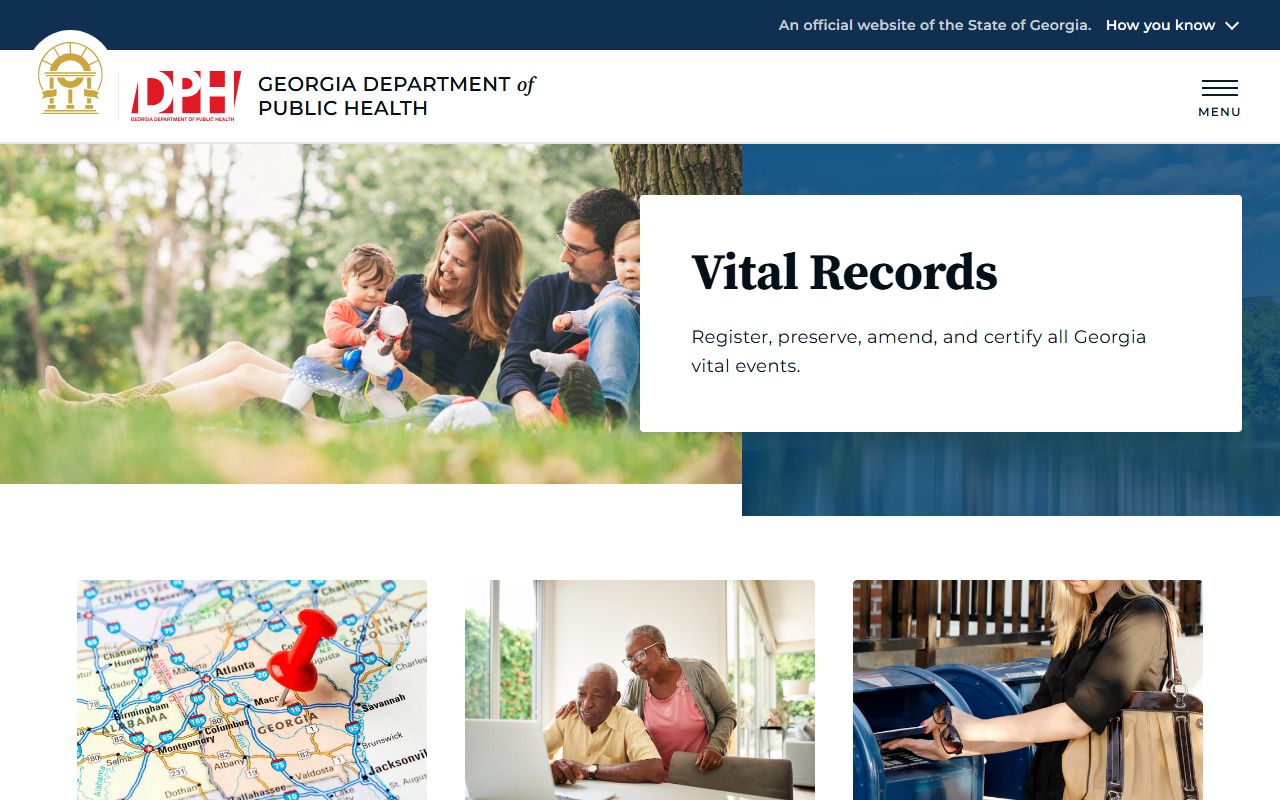
DPH verifications confirm that a divorce occurred but do not include the full decree text. For a complete certified copy, contact the Spalding County clerk directly.
How to Search Spalding Divorce Records
Spalding County participates in the Georgia Superior Court Clerks' Cooperative Authority online system. You can search Spalding divorce cases by party name at gsccca.org. The search is free and returns filing dates, case numbers, and party names. An online search is a smart first step before calling the clerk, since having the case number ready saves time.
The GSCCCA index is updated regularly but may lag a few days behind the courthouse. For cases filed very recently, you may need to call the clerk directly to confirm whether a filing has been indexed yet. Older cases filed before the digital era may appear in the index but have images that are not yet scanned. In those situations, the clerk's office will need to pull the physical file.
Georgia E-Access at georgiacourts.gov/eaccess-court-records/ is another statewide resource that provides court data across Georgia superior courts including Spalding. Some records are view-only in the online system, but you can use them to identify cases before requesting certified copies from the clerk.
Mail requests are an option for people who cannot visit in person. Address your written request to the Spalding County Superior Court Clerk, include the full names of both parties, the approximate year of the divorce, and a self-addressed stamped envelope. Include payment in the amount the clerk specifies when you call to confirm the fee.
Note: Online search results show the index only. Full document images require a separate request to the clerk's office for certified or plain copies.
Spalding County Divorce Filing Process
All Georgia divorces go through the Superior Court. Under O.C.G.A. § 19-5-1, the Superior Court is the only court in Georgia with authority to grant a divorce. This applies in every county, including Spalding. Magistrate courts and probate courts have no jurisdiction over divorce.
Venue rules govern which county you file in. Under O.C.G.A. § 19-5-2, you generally file in the county where the defendant lives. If your spouse lives in Spalding County, the Spalding Superior Court is the right place to file regardless of where you reside. If your spouse has left Georgia, you may be able to file in your own county of residence instead.
Georgia requires a 30-day waiting period after the defendant is served with divorce papers before the court can finalize the divorce. For uncontested cases where both parties agree on all terms, that 30-day window is often the only real delay. Contested cases involving disputes over property, children, or support take longer and may require multiple hearings before a judge resolves the outstanding issues.
The grounds for divorce in Georgia are listed in O.C.G.A. § 19-5-3. Most people use the no-fault ground, which requires showing that the marriage is irretrievably broken. Fault-based grounds like adultery or cruel treatment are still available but require evidence and are less commonly chosen in modern filings.
Once the judge signs the final decree and it is filed with the Spalding clerk, it becomes a public record. Certified copies can be ordered at any point after the decree is entered. The clerk timestamps and seals each certified copy, making it acceptable to government agencies and financial institutions.
Copy Fees for Spalding Divorce Records
The Spalding County Superior Court Clerk charges fees for copies of divorce records. Plain copies cost less than certified copies, which carry the court seal and clerk's signature. Certified copies are generally required when you need proof of divorce for a name change, remarriage, passport application, or similar legal purpose. Plain copies work for personal reference but most agencies will not accept them in place of a certified copy.
For divorces that took place between 1952 and 1996, the Georgia Department of Public Health also provides a verification service through its Vital Records office. DPH at dph.georgia.gov/VitalRecords charges $10 per verification. This service confirms that a divorce occurred and provides basic identifying information, but it does not give you the actual decree. The full decree is only available from the Spalding County clerk.
Under O.C.G.A. § 31-10-22, court clerks report completed divorces to DPH each month. This reporting is how the DPH database was built and continues to be maintained. The reporting obligation means DPH data is generally accurate but can lag by a month or two for recently finalized cases.
Call the Spalding clerk at (770) 467-4340 before visiting to get the current fee amount. Fees can change by administrative order, and knowing the exact amount before you arrive prevents delays at the counter.
Legal Resources in Spalding County
Georgia Legal Aid serves Spalding County residents who need help with civil legal matters and cannot afford an attorney. Their services include assistance with uncontested divorces, name changes after divorce, and related family law issues. Income guidelines apply, and you can check eligibility and apply at georgialegalaid.org.
The Georgia E-Forms project provides free, court-approved forms for people who want to handle an uncontested divorce on their own. Forms include the petition for divorce, settlement agreement, and the final order template. These are available through eforms.georgiacourts.gov and cover the most common uncontested divorce scenarios in Georgia. Using official forms reduces the chance of a filing rejection.
The Georgia State Bar's lawyer referral service can connect you with a licensed attorney in the Griffin area for a low-cost initial consultation. For people who want professional guidance but cannot commit to full representation, this can be a useful middle ground. The Spalding County clerk's office can also point you to local resources, though staff cannot give legal advice themselves.
Note: Georgia Legal Aid offices have intake hours that differ from regular business hours, so check their website or call before visiting to confirm availability.
Divorce Decrees vs. State Certificates
People sometimes confuse divorce decrees with divorce certificates. The decree is the court order the judge signs to end the marriage. It includes the full terms, from property division to child custody to alimony. The certificate is a shorter document that simply records the fact that the divorce occurred. Georgia's vital records system issues verifications rather than traditional certificates.
For most purposes, you want a certified copy of the decree from the Spalding County Superior Court Clerk. Banks, the Social Security Administration, the Georgia DMV, and passport agencies all typically require a certified copy. A DPH verification may suffice for certain administrative uses where only the date and parties need to be confirmed, but for anything requiring the actual terms of the divorce, you need the decree itself.
If you are unsure which county holds the record you need, the GSCCCA statewide name search at gsccca.org can help you identify the correct county without knowing it in advance. Once you find the case in the GSCCCA index, you will see the filing county, and you can contact that clerk's office directly for copies.
Old records from before the digital era may require more time for the clerk to locate. Give the office several business days' notice if you know the record is from before the mid-1990s, since older files may be stored in a different location within the courthouse or at an off-site archive.
Nearby Counties
Spalding County borders several counties in central Georgia. Each has its own Superior Court handling divorce records for cases filed there.